

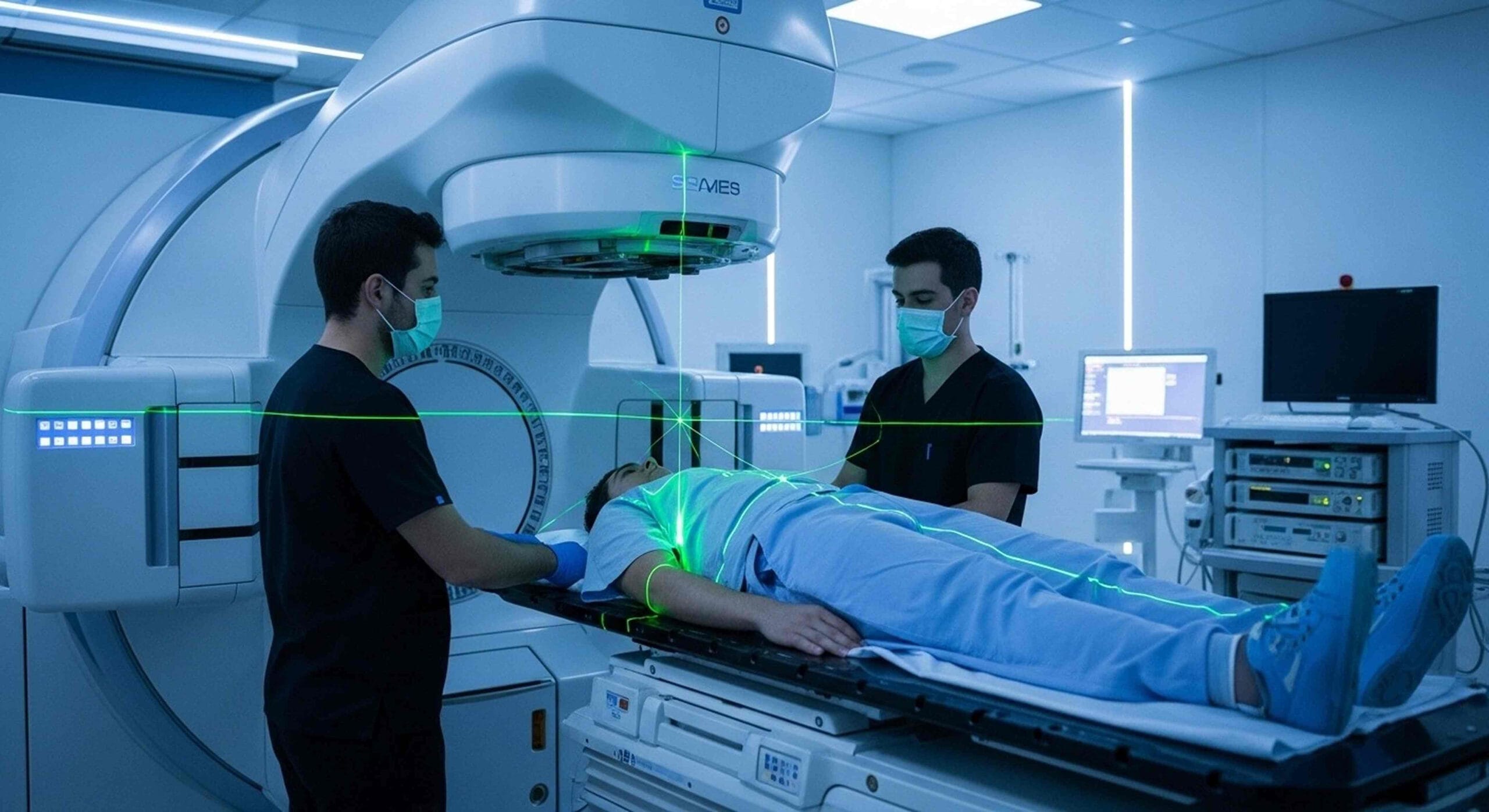
The neck is crowded. Salivary glands, the swallowing muscles, the voice box, the carotid arteries, the jaw, and dozens of small nerves all sit within a couple of centimeters of each other. That’s exactly why head and neck cancer radiation therapy demands more planning precision than almost any other site in the body, and why patients ask so many questions before they start.
If you’ve just been told radiation is part of your plan, you’re probably picturing the worst version of it. Let’s replace that picture with the actual one. Step by step, from the first appointment through the weeks after your last session at Phoenix CyberKnife and Arizona Radiation Therapy Specialists.
Step One: Consultation and Mapping the Problem
Head and neck cancers cover a wide territory: the mouth, tongue, throat, larynx, sinuses, nasal cavity, and salivary glands. Most begin in the flat squamous cells lining those surfaces. Risk factors include tobacco, alcohol, and HPV infection, and HPV-associated throat cancers tend to respond notably well to radiation. The National Cancer Institute’s head and neck cancer fact sheet breaks down the subtypes if you want the fuller picture.
Your first visit is a conversation, not a procedure. Your radiation oncologist reviews your biopsy, PET and CT imaging, and any surgical notes, then explains where the tumor sits relative to the structures we want to protect. You’ll also talk about whether radiation is being used alone, after surgery, or alongside chemotherapy.
Bring someone with you. There’s a lot to absorb, and a second set of ears helps.
Step Two: The Mask, and Why It’s Worth It
This is the part patients dread and then, almost universally, find manageable. A sheet of thermoplastic mesh is warmed in water until it’s soft, laid over your face and neck, and allowed to cool for about five minutes. It hardens into a custom shell that clips to the treatment table.
The mask exists so your head lands in exactly the same position every single day, within a millimeter or two. That repeatability is what lets us shape the dose tightly enough to spare a parotid gland or a swallowing muscle sitting a few millimeters from the target.
It’s mesh, so you can see and breathe through it. If you’re claustrophobic, say so at the consultation. We can enlarge openings around the eyes and mouth, practice with short trial fittings, or arrange a mild anti-anxiety medication before sessions. Nobody gets talked out of their discomfort here.
Simulation follows on the same visit or shortly after: a planning CT with the mask in place, sometimes paired with a contrast scan. A few small reference marks go on the mask, not on your skin.
Step Three: Daily Treatment and Managing Side Effects
A standard course runs about six to seven weeks, Monday through Friday. Each visit takes 20 to 30 minutes door to door, and the beam itself is on for only a few of those minutes. You’ll feel nothing while it’s running. Once a week you’ll meet with your physician to review how you’re doing.
Side effects build gradually and peak near the end of treatment, then improve over the following weeks. The common ones:
- Dry mouth. Salivary glands are sensitive to radiation. Modern planning spares at least one parotid gland whenever tumor position allows. The National Institute of Dental and Craniofacial Research has practical guidance on managing it.
- Sore throat and mouth. Mucous membranes turn over quickly, so they show radiation effects early. Prescription rinses and topical anesthetics help a great deal.
- Taste changes. Food may taste metallic or flat. This is temporary for most patients and improves over two to three months.
- Skin irritation. Think mild sunburn over the treated area. Gentle cleansers and prescribed creams keep it comfortable.
- Fatigue. Real, cumulative, and usually worst in weeks four through seven.
Nutrition is the single biggest predictor of how well patients get through this. Meet with a dietitian early, not once you’re struggling. Soft, high-calorie, high-protein foods; small frequent meals; water constantly within reach. Dental evaluation before treatment starts is also standard, since radiation changes how the jaw heals. Our what to expect guide covers the day-to-day rhythm in more detail, and the American Cancer Society’s overview of oral and oropharyngeal cancer is a solid patient-side reference.
Frequently Asked Questions
Q: Will I be able to keep working during treatment?
A: Many patients do, especially through the first three or four weeks. Appointments are short and can often be scheduled early morning or late afternoon. Fatigue and swallowing discomfort tend to build in the later weeks, so it’s worth talking with your employer in advance about reduced hours toward the end.
Q: Is this covered by insurance?
A: Radiation therapy for head and neck cancer is covered by Medicare and by most private insurance plans. Our staff handles verification and prior authorization before your first session and reviews expected costs with you upfront.
Q: How do you decide between radiation, surgery, or both?
A: It depends on tumor location, stage, HPV status, and what preserves function best. For some laryngeal and oropharyngeal tumors, radiation with or without chemotherapy can control the cancer while preserving speech and swallowing. In other cases, surgery first followed by radiation gives the strongest result. That decision is made together with your surgeon and medical oncologist.
Ask the Questions Before You Start
Understanding the plan changes how the weeks feel. If you’ve been diagnosed with a head and neck cancer and want a clear, unhurried explanation of what radiation would involve for your specific tumor, our team is here for that conversation. Second opinions are welcome and often clarify a decision that feels rushed.
Meet our radiation oncologists and reach out to schedule a consultation at the Valley location closest to you.