

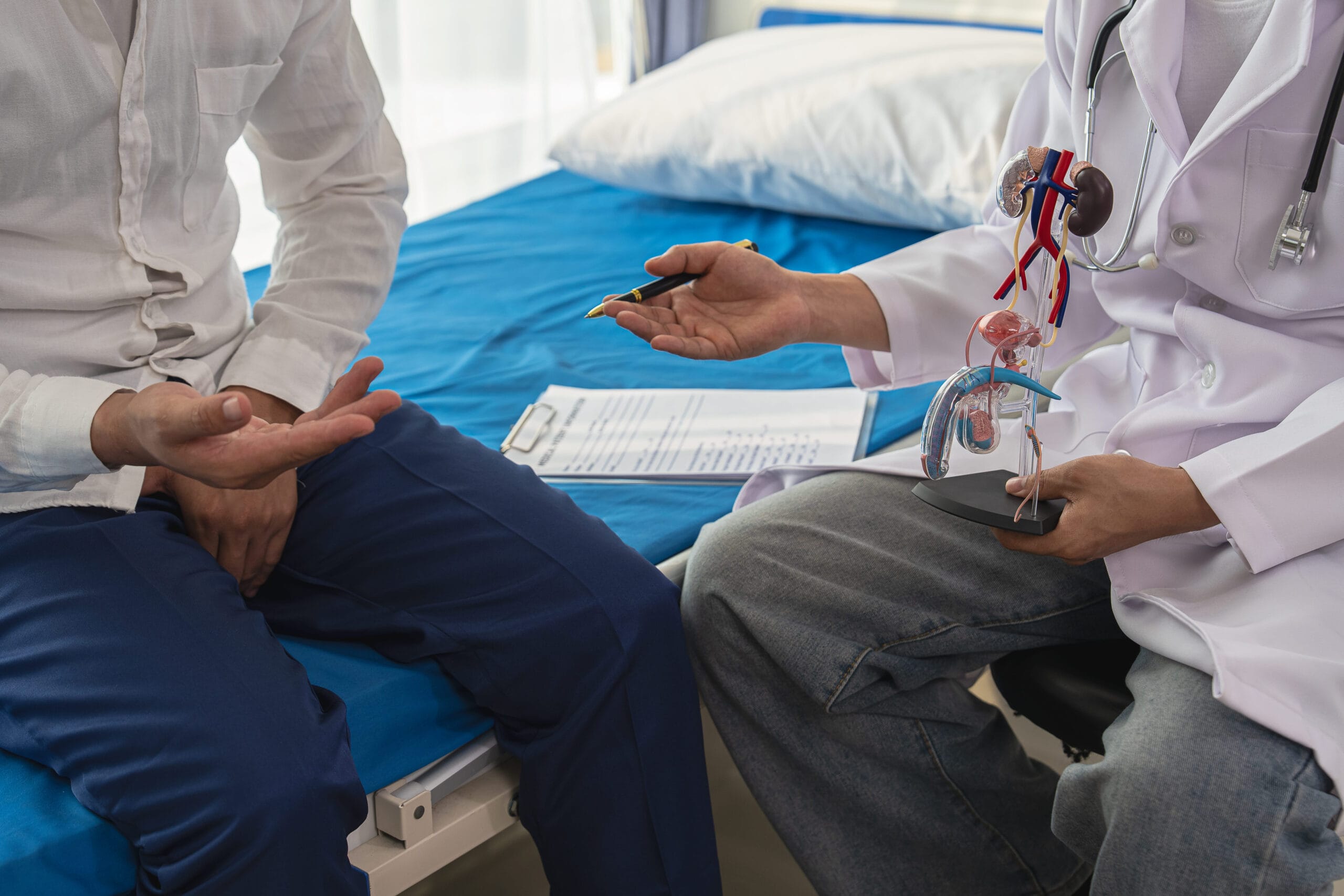
For a patient with muscle-invasive bladder cancer, the default conversation still tends to start and end with radical cystectomy. But a meaningful share of these patients are candidates for bladder preservation, and for some of them bladder cancer radiation therapy delivered as part of trimodality therapy offers comparable disease control with an intact bladder.
This post is written for the urologists, medical oncologists, and primary care physicians who refer to Phoenix CyberKnife and Arizona Radiation Therapy Specialists. It covers who benefits, what the workup should include, and how we coordinate so nothing stalls.
Where Radiation Fits in Muscle-Invasive Disease
Trimodality therapy combines a maximal transurethral resection of the bladder tumor, concurrent radiosensitizing chemotherapy, and external beam radiation. The resection debulks. The chemotherapy sensitizes. The radiation sterilizes what’s left in the bladder wall and regional nodes.
Patient selection drives the result. The strongest candidates typically have a solitary T2 to T3a tumor, a visibly complete or near-complete TURBT, no extensive carcinoma in situ, no hydronephrosis, and adequate baseline bladder capacity and function. The NCI bladder cancer treatment summary outlines how these criteria map to stage.
Radiation also earns a place outside that pathway. It’s used for patients medically unfit for cystectomy, for palliation of hematuria or pelvic pain, and increasingly for oligometastatic disease where stereotactic body radiotherapy can address a small number of sites in a handful of sessions. The American Cancer Society’s overview of radiation for bladder cancer is a useful handout for patients weighing the options.
The technology has moved. Image guidance and adaptive planning account for daily variation in bladder filling, which historically was the limiting factor for pelvic radiation tolerance. Our clinical team plans these cases with daily cone-beam imaging and plan-of-the-day selection where appropriate.
When to Send the Referral, and What to Include
Timing is the single biggest variable we can influence together. The ideal referral arrives at the point of muscle-invasive diagnosis, alongside the urologic surgical consultation, not after the patient has already declined cystectomy. Early parallel consultation lets the patient hear both pathways described accurately and decide from a position of information rather than fear.
Send it early. That’s the whole message.
A referral moves fastest when it includes:
- Pathology report from the TURBT, including depth of invasion, grade, variant histology, and presence of carcinoma in situ
- Operative note documenting completeness of resection
- Staging imaging: CT or MRI of the abdomen and pelvis, chest imaging
- Renal function labs and creatinine clearance, which affect chemotherapy eligibility
- Baseline voiding history, prior pelvic radiation, and relevant comorbidities
- Cystoscopy findings and any prior intravesical therapy
We typically see referred patients within a week, and we send a consultation summary back to the referring physician the same week. If a patient needs multidisciplinary review, we’ll organize it rather than sending them to schedule it themselves.
How Co-Management Works in Practice
Bladder preservation only works when surveillance is tight, so the referring urologist stays central to the case, not peripheral to it.
A typical division of labor: the urologist performs the TURBT and continues cystoscopic surveillance every three months for the first two years. Medical oncology manages the radiosensitizing chemotherapy. We deliver and monitor radiation, usually four to seven weeks depending on the regimen and fractionation. Everyone gets copied on everything.
We also handle the toxicity management that would otherwise land back on your schedule. Urinary frequency and urgency are the most common complaints during treatment, typically starting around week three and resolving within a month or two of the final session. Bowel irritation is less frequent with modern planning but still worth anticipating. We manage both directly and only route a patient back to you when something falls clearly in your lane, such as a suspected obstruction or a surveillance finding.
The critical understanding to establish with the patient upfront is that salvage cystectomy remains available if there’s an incomplete response or a muscle-invasive recurrence. Bladder preservation isn’t a one-way door, and framing it that way from the start reduces the anxiety that pushes patients toward a decision they haven’t fully considered. General background on how radiation is planned and delivered is available through the National Cancer Institute for patients who want to read ahead.
Frequently Asked Questions From Referring Physicians
Q: How quickly can you see a newly diagnosed patient?
A: Generally within five business days, and sooner for urgent cases such as significant hematuria or obstructive symptoms. Simulation and planning add another two to four business days before treatment starts. If timing is tight relative to a chemotherapy cycle, call us directly and we’ll build around it.
Q: What does insurance coverage look like for these patients?
A: Radiation therapy for bladder cancer is covered by Medicare and by most private insurance plans. Our authorization team handles verification and prior authorization before treatment begins, and we flag any coverage issues back to the referring office rather than letting them surface at the patient’s first visit.
Q: Do you see patients for second opinions only?
A: Yes, and we’re glad to. Some patients simply want confirmation that cystectomy is the right call for them, and we’ll say so when it is. A second opinion that reinforces your recommendation is a good outcome, and the patient proceeds with more confidence.
Let’s Talk Through the Case
If you have a patient with muscle-invasive bladder cancer and you’re unsure whether bladder preservation is worth exploring, a phone conversation with one of our radiation oncologists takes ten minutes and often clarifies the path.
We’re a specialty radiation oncology practice, not a competing surgical service. Your patient comes back to you. Find our three Valley locations and direct contact information, and reach out whenever a case would benefit from a second set of eyes.