

Hearing loss in one ear. Occasional ringing. A slight balance shift you can’t quite name. For many people, the first hint of an acoustic neuroma is that quiet. An MRI later, a small benign tumor is found on the nerve that carries sound and balance from the inner ear to the brain. If you’re now researching acoustic neuroma treatment, you probably already know that surgery isn’t your only path.
What an Acoustic Neuroma Is (and Isn’t)
An acoustic neuroma, also called a vestibular schwannoma, is a slow-growing, non-cancerous tumor. It sits on the eighth cranial nerve. Because it grows slowly and stays in one place, doctors often have time to think and plan. Not every acoustic neuroma needs treatment right away. Some small tumors are simply watched with periodic MRIs. Others should be treated to protect hearing or balance before the tumor grows into nearby structures. The Acoustic Neuroma Association has one of the most patient-friendly overviews of the diagnosis if you want a wider read.
The Three Roads: Watch, Treat with Radiation, or Operate
Modern acoustic neuroma care usually starts with a fork in the road. Observation makes sense for small, slow tumors with stable symptoms. Microsurgery may be the right call for very large tumors or tumors already pressing on the brainstem. Stereotactic radiosurgery, delivered on a system like the CyberKnife, is often the best fit for small-to-medium tumors, especially when preserving hearing and facial nerve function is a priority.
None of these choices is universally better. The right one depends on tumor size, symptoms, age, and personal preference. A radiation oncologist familiar with skull base cases can walk through the trade-offs specific to you.
Why Stereotactic Radiosurgery Is a Favorite for This Diagnosis
Two things make focused radiation attractive for acoustic neuroma. First, precision. The CyberKnife can shape a beam to the exact contour of the tumor while sparing the facial nerve running alongside it. Second, control. Long-term studies show tumor control rates above 90 percent, with most patients keeping useful hearing for years. Compared to surgery, there’s no craniotomy, no hospital stay in most cases, and a shorter recovery.
The National Institute on Deafness and Other Communication Disorders has an evidence-based summary of long-term outcomes across all three treatment paths.
What Treatment Day Actually Looks Like
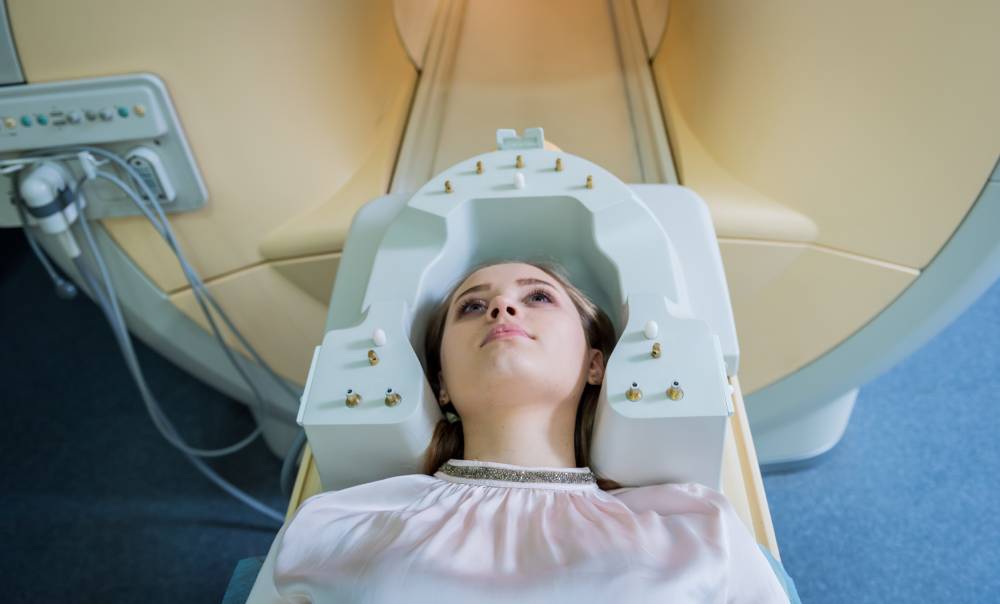
Before the session, you’ll have a high-resolution MRI and a CT for planning. A custom mesh mask holds the head still. On treatment day, you lie back on the table. There’s no incision. No anesthesia in most cases. The CyberKnife arm moves around you, delivering beams from many angles that converge on the tumor. Sessions typically last 30 to 60 minutes. Many patients complete treatment in one session, though some plans use three to five.
Recovery is usually easy: mild fatigue, sometimes a brief headache, occasionally a temporary ear-fullness sensation. Follow-up MRIs at six months and one year confirm the tumor is stable or shrinking. Treatments are covered by Medicare and most private insurance plans.
Frequently Asked Questions
Q: Will I keep my hearing?
A: Preserving hearing is one of the main advantages of stereotactic radiosurgery for acoustic neuroma, though outcomes depend on baseline hearing before treatment. Many patients keep useful hearing on that side for years. The clearest predictor is how well you hear on that side before treatment begins.
Q: How does the risk of facial weakness compare with surgery?
A: With microsurgery, temporary or long-term facial weakness is a recognized risk, especially for larger tumors. Modern stereotactic radiosurgery has a very low rate of facial nerve issues because the dose fall-off outside the tumor is steep. This is a common reason patients lean toward the radiation path.
Q: Do I need to stop working for a week?
A: In most cases, no. Many patients treat on a Friday and return to normal activities on Monday. Every case is different, so your care team will personalize the guidance based on your job and how you feel after the session.
Get Clear Answers Before You Decide
An acoustic neuroma diagnosis rarely calls for a rushed decision. It calls for a careful one. Phoenix CyberKnife and Arizona Radiation Therapy Specialists, now stronger together, can review your MRI, walk you through your options, and coordinate care with your ENT or neurosurgeon. Reach out to schedule a consultation at one of our Valley locations.